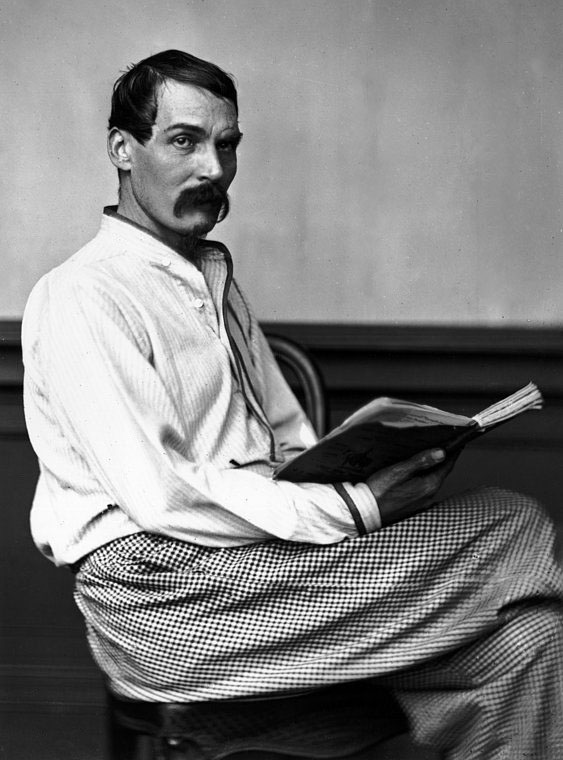
Imagine a man who could pass as a native Pashtun in Afghanistan, a Persian mirza in Mecca, a Hindu Brahmin in India, a Sufi dervish in Egypt, and an Arab merchant in Somalia — all while being a British army officer born in Devon. A man who spoke at least 29 languages, mastered Arabic to the point of passing as a native speaker, learned Persian in a matter of months, and even claimed to have compiled a vocabulary of monkey speech. A man who was expelled from Oxford, stabbed through the face with a javelin, and yet went on to become one of the most decorated explorers and scholars of the Victorian era.
That man was Sir Richard Francis Burton (1821–1890), and his story is one of the most extraordinary in the history of language learning. Burton did not just study languages in a classroom. He lived them, breathed them, and used them as keys to unlock cultures that his contemporaries could only read about. His methods for rapid language acquisition were decades ahead of their time and offer powerful lessons for language learners today.
What makes Burton's story particularly relevant for modern language learners is that his approach was built on immersion, pattern recognition, and fearless practice — principles that align perfectly with how we now know the brain learns languages. He did not have Anki or FluentCards. He did not have audio recordings or spaced repetition algorithms. But he developed a system that worked, and it worked spectacularly.
The Nomadic Childhood That Shaped a Polyglot
Richard Francis Burton was born on 19 March 1821 in Torquay, Devon, into an Anglo-Irish military family. His father, Lieutenant-Colonel Joseph Netterville Burton, was an officer in the British Army. His mother, Martha Baker, was the daughter of a wealthy Hertfordshire squire. By most measures, young Richard had a privileged start in life.
But privilege did not mean stability. The elder Burton suffered from asthma, and the family spent much of Richard's childhood moving between England, France, and Italy in search of a better climate for his health. By the time Richard was a teenager, he had lived in Tours, Blois, Marseille, Pisa, Siena, Florence, Rome, Naples, and Lucca. This constant movement meant that formal schooling was irregular at best. What it provided instead was something far more valuable for a future polyglot: total immersion in multiple languages.
Young Richard learned to speak French fluently from the streets of Tours and Blois. Italian came naturally from his years in Pisa and Lucca. He picked up Neapolitan dialect from the streets of Naples. He learned modern Greek from a merchant in Marseille, acquiring not just the vocabulary but the actual Athenian accent that would later scandalize his Oxford professors. According to biographer Ed Rice, "Such a linguistic feat was a tribute to Burton's remarkable ear and memory, for he was only a teenager when in Italy and southern France."
By the time he enrolled at Trinity College, Oxford in 1840, Burton was already fluent in French, Italian, and modern Greek, and well-versed in Latin and Classical Greek. He spoke Latin with a Roman accent rather than the artificial English academic pronunciation, and he recited Greek with the modern Athenian accent. His Oxford tutors were not impressed. Burton was not either. He described the college teaching as "of the most worthless description" and found the whole experience stifling.
Do what thy manhood bids thee do, from none but self expect applause. He noblest lives and noblest dies who makes and keeps his self-made laws.
In April 1842, Burton was permanently expelled from Oxford after attending a forbidden steeplechase and then — when brought before the disciplinary committee — lecturing the dons instead of apologizing. With his university career in ruins, he did what many young men of his era did: he joined the army. But Burton's army career would be like no other.
India: The Crucible of Language Learning
Burton was commissioned into the Bombay Army of the British East India Company in 1842, arriving in the subcontinent at the age of 21. He was posted to the 18th Regiment of Native Infantry in Gujarat. Most British officers in India kept their distance from the local population, maintaining English customs and social circles. Burton did the opposite. He threw himself into Indian life with a passion that bordered on obsession.
Within his first year in India, Burton began studying languages systematically. But he did not study them from books alone — at least, not the kind of books his fellow officers read. He sought out native speakers as teachers. He hired a Hindu pandit to teach him Sanskrit and the Vedas. He studied Persian with a local scholar. He practiced Hindustani (the everyday lingua franca of northern India) with soldiers and servants. He learned Gujarati from the local population. He mastered Marathi from merchants. He picked up Sindhi during his postings in the region. He learned Punjabi from the Sikh soldiers in his regiment. And he began studying Arabic, the language that would define much of his career.
Burton's language learning was not casual. He passed six formal language examinations conducted by the East India Company, a feat that few British officers even attempted. At the time of his departure from India, he was studying for two more. By any measure, this was an extraordinary achievement. But Burton was not satisfied with mere fluency. He wanted to go native — to understand the inner life of the cultures he was studying.
His linguistic immersion went hand in hand with cultural immersion. He adopted Indian dress. He studied Hindu philosophy so thoroughly that his teacher, a Brahmin, performed the sacred thread ceremony (janeo) and declared Burton a Naga Brahmin. He attended Catholic services, studied Sikhism, and practiced Sufi Islam to the point of undergoing the chilla retreat for the Qadiriyya order. According to biographer Rice, Burton "was circumcised, and made a Muslim, and lived like a Muslim and prayed and practiced like one." He memorized the entire Quran — becoming a hafiz, one who can recite the holy book from memory.
This total immersion approach is what made Burton not just a speaker of languages but a master of cultural fluency. He did not just learn words and grammar. He learned how to think, behave, and exist within a culture. This is the highest level of language learning — and it is a level that very few learners ever reach.
The Pilgrimage to Mecca: Language as a Tool of Survival
Burton's most famous exploit is also his most powerful demonstration of language mastery. In 1853, at the age of 32, he decided to undertake the Hajj — the pilgrimage to Mecca that every able-bodied Muslim is required to perform at least once in a lifetime. For a European Christian in the 19th century, entering Mecca was not just forbidden. It was potentially fatal. The penalty for a non-Muslim discovered in Mecca's holy precincts was death.
Burton's plan was audacious: he would disguise himself as a Muslim pilgrim. But a disguise alone would not be enough. He needed to speak Arabic and Persian fluently, to know the prayers and rituals of the Hajj, to understand the complex social codes of Muslim society, and to maintain his cover under constant scrutiny. A single slip — a wrong word in a prayer, a hesitation at a greeting, an incorrect posture during a ritual — could mean discovery and death.
Burton prepared meticulously. He assumed the guise of a Persian mirza (a scholar) named Abdullah, and later disguised himself as a Sunni sheikh, a doctor, a magician, and a dervish at various stages of the journey. He traveled with an enslaved Indian boy named Nur as his servant. He equipped himself with a case that appeared to hold a Quran but actually contained his compass, watch, money, penknife, pencils, and numbered pieces of paper for taking notes.
The journey took him through Alexandria, Cairo, and Suez, where he joined a caravan of nomads. He arrived in Medina on 27 July 1853 and entered Mecca on 11 September. He participated in the Tawaf (the circumambulation of the Kaaba), visited Mount Arafat, and performed the stoning of the Devil — all while discreetly taking notes on everything he saw.
The result was his book Personal Narrative of a Pilgrimage to Al-Medinah and Meccah, one of the most detailed and celebrated accounts of the Hajj ever written by a Westerner. Burton wrote: "At Mecca there is nothing theatrical, nothing that suggests the opera, but all is simple and impressive... tending, I believe, after its fashion, to good."
The pilgrimage was not without danger. His caravan was attacked by bandits. And despite his mastery of disguise, there was one moment when he almost slipped. A story that followed Burton for the rest of his life claimed that he was nearly discovered one night when he lifted his robe to urinate standing up rather than squatting as an Arab man would. The rumor was that he killed the Arab who saw him to protect his cover. Burton denied it strenuously, but he enjoyed the notoriety too much to let it die. When a concerned priest asked him about the incident, he replied with characteristic Burtonian wit: "Sir, I'm proud to say I have committed every sin in the Decalogue."
The Mecca pilgrimage earned Burton the title of Hajji and the right to wear the green turban. More importantly, it demonstrated that his language learning had reached a level indistinguishable from a native speaker. He had not just learned Arabic. He had become an Arabic speaker to the core of his identity.
Burton's Language Learning Methods: A System for Rapid Acquisition
Burton did not leave behind a formal language manual, but his biographies, letters, and the accounts of his contemporaries allow us to reconstruct his approach. His methods were surprisingly systematic and align remarkably well with modern research on language acquisition.
Method 1: Total Immersion from Day One
Burton never spent months studying grammar before trying to speak. From his first day in a new language environment, he threw himself into real communication. In India, he lived among native speakers, adopted their dress, and participated in their daily life. This is exactly what modern second language acquisition research recommends: massive, comprehensible input from the very beginning, combined with active use of the language in meaningful contexts.
Method 2: Learning from Native Speakers, Not Textbooks
Burton sought out native speakers as teachers, not academic grammarians. His Hindu pandit was a practicing Brahmin, not a university professor. His Arabic teacher was a practicing Muslim. He learned Hindustani from soldiers and servants, not from a textbook. This gave him access to the living language — the idioms, colloquialisms, and cultural references that make up real communication.
Method 3: Mastery of Script and Writing
Burton did not just learn to speak. He learned to read and write in every language he studied. He passed formal written examinations in six Indian languages. He could write diplomatic documents in Arabic, Turkish, and Persian. Writing forces a level of precision that speaking does not require. It strengthens orthographic processing and creates deeper neural encoding of the language.
Method 4: Deliberate Practice of Difficult Sounds
Burton paid extraordinary attention to pronunciation. He was known for his remarkable ear for language, which allowed him to not just learn words but to reproduce the exact sounds, intonations, and rhythms of native speech. This is why he could pass as a Pashtun in Afghanistan and as an Arab in Mecca. He did not sound like a foreigner because he had trained his articulatory system to produce the sounds of the language with native-like precision.
Method 5: Fearless Use of Language
The most striking feature of Burton's approach was his complete lack of fear. He did not worry about making mistakes, about sounding foolish, or about offending native speakers with imperfect grammar. He spoke, made errors, learned from them, and kept going. This absence of foreign language anxiety — the psychological barrier that holds back so many modern learners — was perhaps his greatest advantage.
Language is the key that unlocks the door to another culture. Without it, you are forever a guest. With it, you can become a citizen of the world.
The Complete Polyglot: Burton's Language Inventory
Biographers disagree on the exact number of languages Burton spoke. The most commonly cited figure is 29 languages. But the range and depth of his linguistic knowledge is extraordinary by any standard.
His known languages include:
- European: English, French, Italian, Modern Greek, Latin, Classical Greek, Portuguese, Spanish, German, Neapolitan dialect
- Middle Eastern: Arabic (multiple dialects), Persian (Farsi), Turkish, Hebrew, Armenian
- South Asian: Hindustani (Hindi-Urdu), Gujarati, Marathi, Punjabi, Sindhi, Saraiki, Sanskrit, Pashto
- African: Somali, Ge'ez (Ethiopic), Swahili
- East Asian: Chinese (some ability), Malay
- Other: Romani (learned during a childhood encounter with a Roma girl)
But what makes Burton truly remarkable is not just the number but the depth of his knowledge. He passed formal examinations in six languages. He translated the Arabian Nights (One Thousand and One Nights) from Arabic into English, a work of 17 volumes that remains one of the most celebrated translations ever produced. He translated the Kama Sutra from Sanskrit (working from a French intermediary). He translated the Portuguese epic The Lusiads. He wrote a book on the history of swordsmanship in multiple languages. And he composed original poetry in Persian-style forms.
Perhaps the most curious of Burton's linguistic interests was his attempt to understand the "language" of monkeys. According to his own accounts and those of his contemporaries, Burton kept a large menagerie of tame monkeys during his time in India and spent hours observing and recording their vocalizations. He claimed to have identified and catalogued approximately sixty distinct "words" in monkey speech. While this sounds eccentric — and it certainly was — it reveals something important about Burton's approach to language. He saw language everywhere. He saw it as a spectrum of communication that extended beyond human speech. This breadth of vision was what made him not just a polyglot but a true linguist in the deepest sense.
Burton's Later Life: Language at the Service of Empire and Scholarship
After his explorations, Burton entered the British diplomatic service. He served as consul on the island of Fernando Po (now Bioko in Equatorial Guinea), in Santos (Brazil), in Damascus (Syria), and finally in Trieste (Austria-Hungary). In each post, he continued his language studies, adding Portuguese in Brazil, deepening his Arabic in Syria, and studying the local dialects of each region.
His diplomatic career was mixed. He was too unconventional, too independent-minded, and too fond of shocking people to thrive in the rigid hierarchy of the Foreign Office. A contemporary described him as "ill fitted to run in official harness." But his language skills made him invaluable. In Damascus, he was one of the few European diplomats who could speak directly with local leaders in their own languages, without interpreters. He negotiated with Bedouin tribes in their own dialects. He corresponded with Ottoman officials in Turkish. He befriended the Algerian resistance leader Abdelkader al-Jazairi in Arabic.
In 1886, after decades of service, Burton was awarded a knighthood (KCMG) by Queen Victoria — a belated recognition of his extraordinary contributions to exploration, scholarship, and diplomacy. He continued writing and translating until his death from a heart attack on 20 October 1890 in Trieste.
After his death, his wife Isabel burned many of his papers, including journals, manuscripts, and a planned new translation of The Perfumed Garden. The loss to scholarship was immeasurable. But a substantial portion of Burton's written legacy survived and is held at the Huntington Library in California: 21 boxes of manuscripts, 24 boxes of correspondence, and countless other materials.
What Modern Language Learners Can Learn from Burton
Sir Richard Francis Burton lived in a world without modern language learning tools. There were no apps, no spaced repetition algorithms, no audio recordings, no graded readers, no online tutors. And yet he achieved a level of language mastery that few modern learners come close to reaching. What can we learn from him?
Lesson 1: Immersion Is Irreplaceable
Burton's total immersion approach is backed by modern research. Studies consistently show that learners who immerse themselves in a language — who live it, breathe it, and use it for real communication — acquire it faster and more deeply than those who only study it in a classroom. You do not need to move to another country to achieve immersion. You can create language islands in your daily life: change your phone's language, listen to target-language podcasts, watch films without subtitles, and seek out native speakers for conversation.
Lesson 2: Fear Is the Enemy of Fluency
Burton's greatest advantage was his complete absence of fear. He made mistakes, sounded foolish, and did not care. Modern research on foreign language anxiety confirms that fear of negative evaluation is one of the biggest barriers to language acquisition. Burton's fearless approach is not just a personality quirk — it is a strategy. The less you fear, the more you practice. The more you practice, the faster you learn.
Lesson 3: Writing Deepens Learning
Burton mastered multiple writing systems alongside spoken languages. Modern research on the production effect confirms that writing — especially handwriting — creates stronger memory traces than typing or passive reading. Flashcard apps like FluentCards are excellent for review, but consider supplementing them with handwritten notes or a journal in your target language.
Lesson 4: Pronunciation Matters More Than You Think
Burton's ability to pass as a native speaker depended on his extraordinary ear for pronunciation. Modern research confirms that learners who prioritize pronunciation from the beginning achieve higher overall proficiency. Use tools like TTS (text-to-speech) to hear correct pronunciation, practice shadowing technique, and pay attention to the rhythm and intonation of your target language from day one.
Lesson 5: Language Is a Key, Not a Subject
Perhaps the most important lesson from Burton's life is that he never treated language as an academic subject. He treated language as a tool — a key that unlocked doors to exploration, adventure, scholarship, and human connection. When you learn a language, you are not just memorizing words and grammar rules. You are acquiring the means to enter another world. Keep that goal in sight, and the process becomes not just bearable but genuinely thrilling.
Sir Richard Francis Burton's complete works, including over 200 journal and magazine articles, are available at burtoniana.org. His translations of the Arabian Nights, Kama Sutra, and The Lusiads are in the public domain and freely available online.
Turn your own language learning journey into an adventure with FluentCards — the free flashcard app with FSRS spaced repetition, TTS pronunciation, and AI mnemonics. Start learning today.