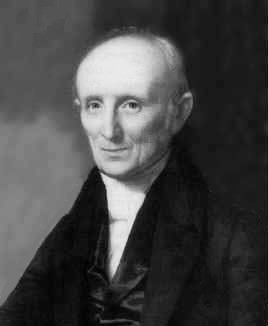
There is a phrase that runs through Laplace's Traite de mecanique celeste like a trapdoor: il est facile de voir. It is easy to see.
It is not easy to see. Laplace was the greatest mathematical astronomer of his age and he wrote for readers who were nearly his equal, so where the algebra became long he simply asserted that the next step followed, and moved on. For thirty years, English-speaking students of celestial mechanics hit those sentences and could not get through them.
The man who fixed that problem had left school at ten. He had never sat in a university lecture. He taught himself Latin at seventeen so that he could read Newton, taught himself French at nineteen so that he could read the French mathematicians, and started German at forty-five because by then the important work was appearing in German.
His name was Nathaniel Bowditch, and the reason he matters to anyone learning a language is that he did not learn languages in order to know languages. He learned them the way a locksmith learns locks: because there was a door he needed open.
Salem, 1773
He was born on 26 March 1773 in Salem, Massachusetts, the fourth of seven children of Habakkuk Bowditch and Mary Ingersoll. The family had been shipmasters in Salem for generations, but Habakkuk had gone to sea and come back to shore, and after his ship went aground in 1775 he ended up a cooper - a maker and repairer of wooden casks. The business failed. The family was poor enough that the Salem Marine Society had to help them at one point, and Nathaniel later wore summer clothes through New England winters and dined on potatoes.
He went to school until he was ten. Then he was put to work in his father's cooperage, and that was the end of his formal education.
Two years later, in 1785, he was apprenticed as a clerk to Hodges and Ropes, ship chandlers - the shop that supplied provisions and equipment to vessels leaving Salem. It was a nine-year indenture. In 1790 he moved to Samuel C. Ward's shop. He was, by any measure available at the time, a shop boy with a good hand for figures.
What he had, and what this story turns on, was a place to read. The chandlery had a library. So did Salem. And in a town that sent ships everywhere, books arrived by accident.
The Library That Came as Plunder
Richard Kirwan was an Irish chemist, elected to the Royal Society in 1780. His working library - the books a serious scientist of the period owned - was shipped between Ireland and England, and a Salem privateer took the vessel. The library was brought back to Salem as prize, and by June 1791 Bowditch had access to it.
Consider what that accident gave a clerk of eighteen: a working scientific library, in a town of a few thousand people, with no university and no professor to explain any of it. There was no one in Salem who could teach him the contents of those books. There was only the books.
So he built the curriculum himself and worked through it in order. Algebra in 1787, at fourteen. Differential and integral calculus in 1789, at sixteen. Then he hit the wall that every self-taught mathematician of the eighteenth century hit: the central text of the field was Newton's Philosophiae Naturalis Principia Mathematica, and it was in Latin.
In 1790, aged seventeen, Bowditch learned Latin. Not as a subject. As an access key to one book.
Two years later he did it again with French, and this time the reason is stated plainly in the record: he learned languages in order to study mathematics published in those languages. That is the entire method. It is also, for anyone who has spent a year on a language course with no text they actually want to read, the thing that is usually missing.
Five Voyages and a Crew of Navigators
Between 1795 and 1803 Bowditch went to sea five times, starting as ship's clerk and captain's writer and ending in command of a merchant vessel, mostly on the long runs to the East Indies - Batavia, Manila, Sumatra. He took the books with him. On a passage of four or five months a man with a cabin and a lamp can get through a great deal of mathematics.
The voyages produced one of the best anecdotes in the history of self-education. Arriving at Manila, a Scottish resident named Murray asked Captain Prince how he had navigated into the harbor by dead reckoning alone.
"I have a crew of twelve men, every one of whom can take and work a lunar observation as well, for all practical purposes, as Sir Isaac Newton himself, were he alive."
Murray did not believe him, went aboard to check, and came away saying there was more knowledge of navigation on that ship than in all the vessels that had ever floated in Manila Bay. The crew of twelve all later reached the rank of first or second officer.
This is not a decorative detail. A captain who has taught twelve sailors to compute lunars has been practising the most reliable form of study there is: explaining a procedure until other people can execute it. Whatever Bowditch knew, he had to make it teachable, and teachable knowledge is knowledge that has been fully understood.
Eight Thousand Errors
In 1799 an enterprising and somewhat piratical publisher named Edmund M. Blunt brought out an American edition of John Hamilton Moore's The Practical Navigator, the standard navigation handbook of the English-speaking world. Blunt needed someone to correct it. He found a young Salem mathematician who had just come back from Manila.
Bowditch found a disaster. Moore had copied his rules from Robertson and his tables from Maskelyne's Requisite Tables, added mistakes of his own, and never checked any of it. The worst single error was in the tables of the sun's declination: Moore had treated the year 1800 as a leap year. In the preface to his own book, Bowditch described the consequence without softening it - the error amounted to as much as twenty-three miles in some numbers, "which was the cause of losing two vessels to the northward of Turk's Island, and bringing others into serious difficulties."
In July 1799, the day before Bowditch sailed again for Manila, Blunt came out to the ship in a small boat with a proposal: not a corrected edition of Moore, but a new book, with every figure in the tables verified from scratch.
Bowditch did it on the voyage. He re-computed the tables rather than checking them, and in the process he found and corrected eight thousand errors in Moore's work and more than two thousand in Maskelyne's Requisite Tables, most of them in the last decimal place. His journal from those months is a monotony of small discoveries - another error in Moore's, eight errors in Moore's today, five more.
"In performing this, no less than eight thousand errors were discovered and corrected in Moore's work, and above two thousand in Maskelyne's Requisite Tables."
The book appeared in 1802 as The New American Practical Navigator. It was an immediate success - seven thousand copies of the American editions sold within two years, ten editions before the author died - and it has never gone out of print. The United States government bought the rights in 1867; it was among the first publications of the Hydrographic Office, which is why sailors still call it H.O. No. 9. It is carried on board every commissioned vessel of the United States Navy, and copies of "Bowditch" are still corrected by Notice to Mariners.
Notice what the language work actually consisted of here. Bowditch did not read Moore. He read Moore against the sources, recomputed every number, and kept a record of every discrepancy. The French and Latin he had taught himself were not ornaments; they were the reason he could go to the original tables instead of trusting a copy of a copy.
The Degree He Would Not Use
In July 1802, the year the Navigator appeared, Harvard College awarded Nathaniel Bowditch an honorary Master of Arts. In 1816 it gave him an honorary Doctor of Laws. A man whose schooling ended at ten held two Harvard degrees before he was forty-four.
Then Harvard offered him the Hollis Professorship of Mathematics and Natural Philosophy. He turned it down. In 1818 Thomas Jefferson offered him the chair of mathematics at the University of Virginia; he declined that too, and in 1820 he declined West Point.
His stated reason for the Harvard refusal is the most revealing sentence in his biography. He was earning good money as president of the Essex Fire and Marine Insurance Company in Salem, and the Hollis chair would have paid less while consuming the time he used for research. But there was a second reason, and the Harvard Magazine account of it is brutal in its clarity: he was haunted by his lack of a gentleman's education, with its immersion in Latin and Greek, and was afraid, in the words of a contemporary, of "singing small on classic ground."
Read that again, because it is the emotional core of every self-taught learner's story. The man who had taught himself Latin at seventeen to read Newton, who had corrected eight thousand errors in the standard reference of his profession, did not believe he could hold his own in a room of men who had been taught Latin at eight. That is not a fact about his Latin. It is a fact about what it feels like to arrive by a different road.
French, at Scale
In 1804 he became president of the Essex Fire and Marine Insurance Company, and for nineteen years he ran it while doing mathematics in the evenings. He also began the work he valued most.
Laplace's Traite de mecanique celeste was the summit of Newtonian astronomy, and it was in French, and it was written for people who did not need the steps. Bowditch's translation was not a translation in any ordinary sense. He supplied the steps Laplace had skipped, added the results published since the original, and restored the credits Laplace had omitted - his three stated purposes. The commentary more than doubled the length of the work.
He finished the first four volumes by 1818. He did not publish for eleven years, partly from money and partly from perfectionism, and when the American Academy of Arts and Sciences offered to raise a subscription to pay for printing, he refused, on the grounds that he would not take money from people for a book they could not read. He paid for it himself - close to twelve thousand dollars, by his son's account a quarter of his whole property.
The volumes came out in 1829, 1832, 1834 and 1839, the last after his death. The fifth volume of the original appeared too late for him to translate it, though he used parts of it in his commentary. And there is one more detail, quieter than the rest: there is no evidence that Laplace ever replied to any communication from Bowditch.
The translation is generally credited with starting American participation in physical astronomy. A self-educated clerk from a chandler's shop, working from a language he taught himself at nineteen, made the most advanced mathematical work of the age readable in English.
The German, Started at Forty-Five
By 1818 Bowditch was the most accomplished mathematician in the United States. He had an international reputation, membership in the Royal Society, and an honorary doctorate. He was also, at forty-five, beginning to study German.
The reason is the same reason as always. The literature had moved. Serious work in his field was increasingly appearing in German, and a man who could not read German could not read it. So he learned German, in middle age, with no classroom and no teacher, for the same purpose he had learned Latin at seventeen: there were pages he needed to get through and the pages were not in English.
This is the detail that dismantles the most common excuse in language learning. Bowditch did not believe in a critical window, or in age-related decline in the ability to acquire a language, because he had no theory about it at all. He had a bibliography and a shortage of translations.
What He Built With the Rest of It
He left the insurance company in 1823 and became an actuary, work he described as the most congenial of his life. From 1829 until his death he was president of the American Academy of Arts and Sciences. He served Harvard as an Overseer from 1810 after being assured the duties were minimal, and later in a more substantial role. He was, by the estimate of the time, the best mathematician in New England, called by Jefferson "a meteor of the hemisphere."
He died of stomach cancer in Boston on 16 March 1838, ten days short of sixty-five.
The Method, Extracted
Strip away the navigation and the astronomy and there is a working system here, and it is short enough to write on a card.
Learn the language for a text, not for a level
Every language Bowditch acquired had a specific book attached to it. Latin meant Newton's Principia. French meant the mathematicians. German meant the journals. If you cannot name the book, article or conversation you are learning the language for, this method is not available to you yet - and that, not aptitude, is usually what separates the learners who finish from the ones who restart every January.
Start with the hardest thing you care about
The Principia is not graded Latin. Bowditch read it because he needed what was inside it, and the need carried him through the difficulty. Interest is not a soft variable in this work; it is the engine that gets you through material you cannot yet fully parse.
Verify, do not trust
He found eight thousand errors in a book that had been the standard for decades, because his habit was to recompute rather than to read. Applied to language, the equivalent habit is to check the phrase rather than assume the phrase: to notice what native speakers actually say, not what the textbook says they say.
Keep the notebook
His journal records a running tally of caught errors - eight today, five more. Small, dated, unglamorous entries. The value is not in the entries; it is that the tally made the work visible, and visible work gets continued.
Teach it to twelve sailors
Bowditch's crew could all take a lunar observation, which means their captain had explained the procedure until ordinary men could execute it. If you can explain the rule you just learned to someone who does not have it, you own it. If you can only recognize it, you do not.
Learn the next language when the literature moves
At forty-five he started German without ceremony. There is no age at which this stops working, and no age at which it becomes dignified to stop. There is only the question of whether there is something you want to read.
What the Languages Were For
Nathaniel Bowditch never wrote a word about language learning. He left no method, no advice, no system. What he left is a set of books with his name on them, and a life that shows what a language is actually for.
He had no school after ten, no professor, no classroom, no textbook written for learners. He had a chandler's shop with a library in it, an Irish chemist's plundered books arriving by privateer, and a habit of asking what a text said and then going to find out.
The languages were never the achievement. They were the keys he cut because there were doors. Latin at seventeen for Newton. French at nineteen for Laplace. German at forty-five for whatever was next.
That is the whole story, and it is the most encouraging one in this archive: you do not need a gift, an institution, or an early start. You need a text you genuinely want to read, and the willingness to look up every word in the first page of it.